
THE REFERENCE FOR A GOOD PHYSIOTHERAPIST IN MONTREAL PHYSIO PLATEAU
EASY APPOINTMENT SETTING! MAKE AN APPOINTMENT ICI
  • FRANÇAIS

online appointment

call us

514-277-8954

Make an

Appointment
  • HOME
  • ABOUT US
  • SERVICES
    • MANUAL THERAPY
    • SPORTS PHYSIOTHERAPY
    • PHYSIOTHERAPY FOR RUNNERS
    • PELVIC FLOOR REHABILITATION
    • CYCLING
    • CLIMBING
    • PEDIATRIC REHABILITATION
    • VESTIBULAR REHABILITATION
    • TEMPOROMANDIBULAR JOINT
    • CONCUSSION PHYSIOTHERAPY
    • PELVIC FLOOR REHABILITATION
    • EXERCISES
  • CONDITIONS TREATED
    • CALF, ANKLE AND FOOT PAIN
    • HIP, PELVIC, AND THIGH PAIN
    • KNEE PAIN
  • OUR TEAM
    • OLIVIER BENOIT
    • GUILLAUME HOHLY
    • EMMANUELLE HARRIS RANGER
    • MYRIAM LAFRANCE
    • ZOÉ NGUYEN-BERGERON
    • LAUREN QUIGLEY
    • ALEXIS CARTIER
    • RÉMI GRANDHOMME
    • CHLOË CONVERT
    • YSALINE ANYA MENGUE
  • JOB
  • BLOG
CONTACT US
  • HOME
  • ABOUT US
  • SERVICES
    • MANUAL THERAPY
    • SPORTS PHYSIOTHERAPY
    • PHYSIOTHERAPY FOR RUNNERS
    • CYCLING PHYSIOTHERAPY
    • CLIMBING PHYSIOTHERAPY
    • PEDIATRIC REHABILITATION
    • VESTIBULAR REHABILITATION
    • TEMPOROMANDIBULAR JOINT
    • CONCUSSION PHYSIOTHERAPY
    • PELVIC FLOOR REHABILITATION
    • EXERCISES
  • CONDITIONS TREATED
    • CALF, ANKLE AND FOOT PAIN
    • HIP, PELVIC, AND THIGH PAIN
    • KNEE PAIN
  • OUR TEAM
    • OLIVIER BENOIT
    • GUILLAUME HOHLY
    • EMMANUELLE HARRIS RANGER
    • MYRIAM LAFRANCE
    • ZOÉ NGUYEN-BERGERON
    • LAUREN QUIGLEY
    • ALEXIS CARTIER
    • RÉMI GRANDHOMME
    • CHLOË CONVERT
    • YSALINE ANYA MENGUE
  • JOB
  • BLOG
  • APPOINTMENT
  • CONTACT US
  • FRANÇAIS
Facebook Instagram LinkedIn

Hip, pelvic, and thigh pain

Physiotherapy Plateau Mont-Royal

The hip and pelvis are at the heart of all your movements. Walking, running, climbing stairs, getting up from a chair — any pain in this region can quickly limit your independence and quality of life. Our physiotherapists at Physio Plateau offer personalized care tailored to your goals

Book an appointment

Understanding your pain

The hip and pelvis: A key region often misunderstood

Hip, pelvic, and thigh pain are among the most frequent complaints in musculoskeletal physiotherapy. However, this region of the body is complex: pain perceived in the hip may actually originate from the hip itself, the lower back, the sacroiliac joint, or even the sciatic nerve.

That is why at Physio Plateau, we systematically perform a comprehensive biomechanical assessment that examines not only the hip and pelvis, but also the lower back, the knee, and overall posture. This global approach allows us to identify the true source of your pain and provide precise, lasting treatment.

Whether you are suffering from acute pain following a trauma, chronic pain that has developed gradually, or require post-operative care, our team has the expertise and tools to help you achieve a full recovery and prevent recurrence.

Do not let pain dictate your movements. Physiotherapy is effective in the vast majority of cases.
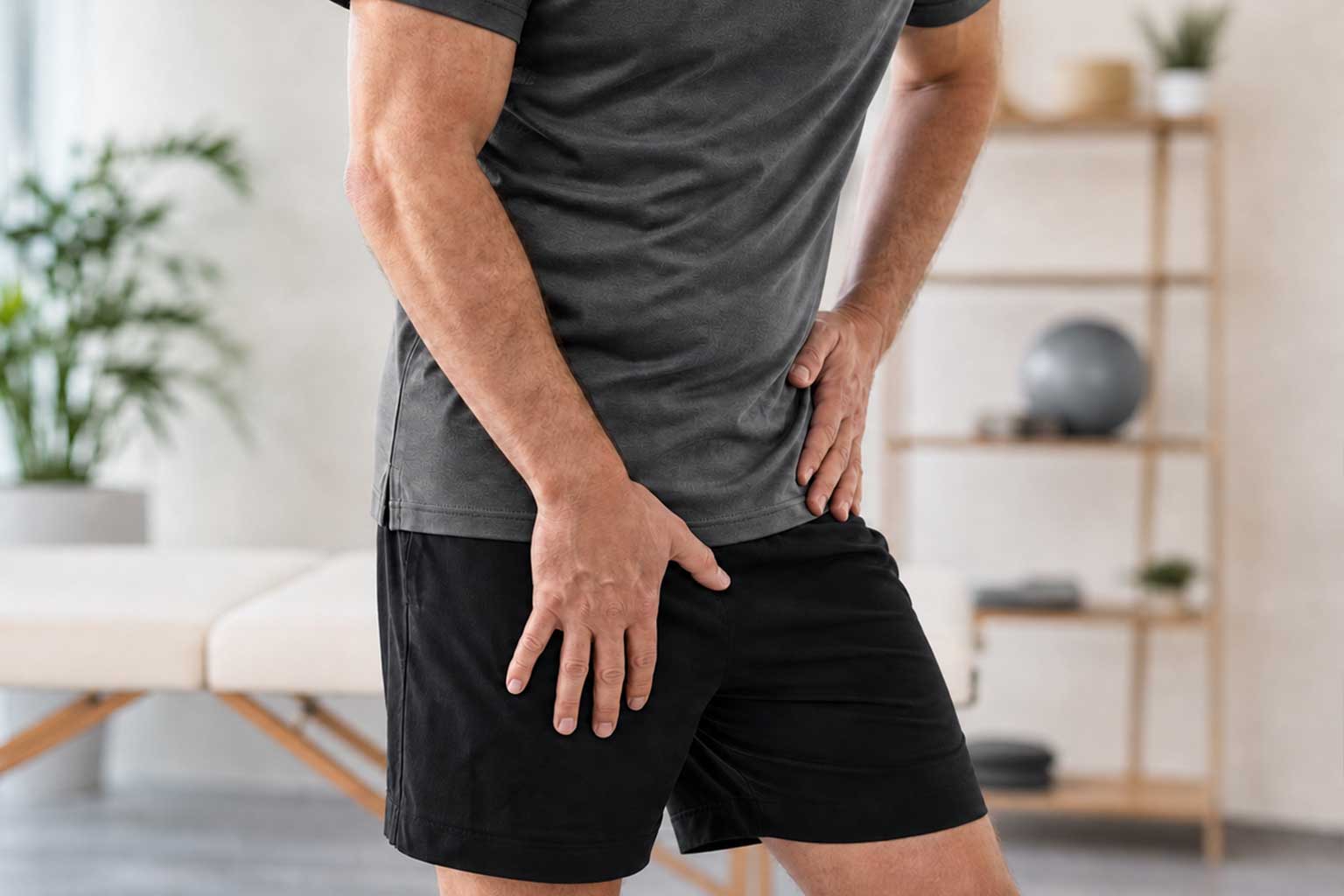

1/3

of adults over 45 report hip pain affecting their quality of life

70%

of hip pain cases can be treated effectively through physiotherapy.

#2

The hip is the second most frequently surgically replaced joint — physio reduces this risk

Pathologies treated

Main conditions treated at Physio Plateau:

Our physiotherapists are trained to assess and treat all hip, pelvic, and thigh pathologies, whether they are acute, chronic, sports-related, or degenerative.

DEGENERATIVE

HIP OSTEOARTHRITIS (COXARTHROSIS)

Coxarthrosis is the progressive degeneration of the cartilage in the hip joint. It causes mechanical pain in the groin, morning stiffness, and a gradual decrease in range of motion. The pain often radiates toward the thigh and knee, which can make diagnosis difficult.

TRAUMATIC

THIGH MUSCLE STRAIN

A thigh muscle strain can affect the adductors, hamstrings, or quadriceps following intense effort, a sudden movement, or muscle overload. Physiotherapy helps reduce pain, promote muscle healing, and progressively restore strength, flexibility, and function.

OVERUSE

GLUTEAL TENDINOPATHY AND TROCHANTERIC BURSITIS

Gluteal tendinopathy is one of the most common causes of lateral hip pain. It manifests as pain on the side of the hip that can radiate down the side of the thigh, aggravated by climbing stairs, prolonged walking, standing on one leg, or lying on one’s side.

SPORTS-RELATED

PUBALGIA AND ADDUCTOR TENDINOPATHY

Pubalgia and adductor tendinopathies cause groin pain often linked to explosive movements, running, or changes in direction. Physiotherapy helps reduce pain, improve pelvic stability, and promote a gradual return to sports activities.

YOUNG ADULT / TRAUMATIC

FEMOROACETABULAR IMPINGEMENT (FAI) AND LABRAL TEAR

Femoroacetabular impingement (FAI) is a hip abnormality causing friction between the femoral head and the acetabular rim. This condition is frequently associated with a lesion of the labrum, a cartilaginous ring essential for hip stability. Often observed in active young adults, these conditions can lead to deep groin pain, clicking, a sensation of locking, or instability.

RADIATING PAIN

NEURALGIA

Neuralgias such as sciatica, cruralgia, or meralgia paresthetica can cause pain, numbness, or burning sensations in the hip, thigh, or leg. Physiotherapy helps decrease nerve irritation, improve mobility, and relieve daily symptoms.

OVERUSE / RUNNING

PROXIMAL HAMSTRING TENDINOPATHY

This condition affects the insertion of the hamstring muscles on the ischial tuberosity (the bone you sit on). It manifests as deep pain in the buttock when sitting, running, or performing stretching exercises. It is common among runners, cyclists, and endurance sports practitioners.

BUTTOCK PAIN

PIRIFORMIS SYNDROME

The piriformis muscle, located deep in the buttock, can compress the sciatic nerve when it is tight or spasmodic. This causes buttock pain that radiates toward the thigh and leg, often confused with sciatica of lumbar origin. The pain is typically aggravated by prolonged sitting and hip rotation movements.

TRAUMATIC

HIP, KNEE, AND ANKLE FRACTURES

A fracture in the hip, leg, or ankle can lead to pain, stiffness, loss of strength, and decreased mobility of the lower limb. Physiotherapy aims to promote recovery, improve walking, and gradually restore functional abilities and daily independence.

Book an appointment

When to consult?

Recognizing hip pain symptoms that require treatment

Don’t let the pain set in. The earlier treatment is initiated, the better and faster the recovery.

  • GROIN OR HIP PAIN

Persistent pain in the groin, on the side, or at the back of the hip, at rest or during exertion.

  • PAIN RADIATING INTO THE THIGH

Painful sensation that travels down the front, side, or back of the thigh.

  • STIFFNESS AND LOSS OF RANGE OF MOTION

Difficulty spreading the legs, crossing the legs, or putting on shoes.

  • LIMPING OR GAIT ASYMMETRY

Unconscious modification of the way you walk to avoid pain.

  • LOSS OF STRENGTH

Difficulty with stairs or getting up from a chair.

  • NOCTURNAL PAIN

Pain that disrupts sleep, particularly when lying on the affected side.

  • SENSATION OF PELVIC IMBALANCE

Feeling of hip misalignment, unequal leg length, or pain in the sacrum.

  • NUMBNESS OR BURNING

Tingling, burning, or numbness sensations on the thigh or in the buttock.

Our approach

How we treat your hip and pelvic pain

At Physio Plateau, every patient benefits from a structured clinical process, based on evidence and fully adapted to their condition and life goals.

Complete biomechanical assessment

The first session is entirely dedicated to the assessment. Your physiotherapist analyzes your pain history, the joint mobility of your hip and pelvis, the strength of stabilizing muscles (glutes, adductors, flexors), your overall posture, and your movement patterns. The examination systematically includes the lower back and knee, as hip pain often has a regional or distal component.

Physiotherapy diagnosis & explanation

Following the assessment, your physiotherapist will provide a clear clinical diagnosis: which structure is involved, why the pain appeared, and what factors are maintaining it. This transparency is fundamental — a good understanding of your condition significantly improves treatment adherence and long-term results.

Tailored treatment program

A personalized treatment plan is developed taking into account your condition, age, physical activity level, and goals. It combines in-clinic sessions and a progressive home exercise program. Milestones are clearly defined so you can measure your progress — getting back on a bike, walking without pain, returning to work, or regaining an optimal level of sports performance.

Active and manual treatment in the clinic

Each session combines a manual component (joint mobilization, soft tissue release, neural techniques) and an active component (targeted muscle strengthening, functional exercises). The active approach is paramount: it is your body that heals; your physiotherapist guides you and creates the optimal conditions to achieve this.

Return to activities and prevention of recurrence

The final phase of treatment aims to prepare your hip and pelvis to gradually tolerate the loads associated with your usual activities. You leave with the tools, exercises, and knowledge necessary to maintain your gains over the long term and reduce the risk of relapse — whether it involves returning to gardening, running, or going back to work.

Prepare your visit

To consider before the first session

The treatment of hip and pelvic pain is based on a personalized approach aimed at identifying the real cause of your pain and improving your daily movements.

  • Wear comfortable clothing that allows for free movement and exposure of the hip and leg area (shorts recommended).
  • Prepare a summary of your pain, past injuries, treatments received, and available imaging reports (X-rays, MRI, ultrasounds).
  • Bring a list of your current medications.
  • Mention the activities or sports you practice as well as the movements that aggravate your symptoms (running, cycling, hiking, standing at work, etc.).
  • If you use a walking aid, a brace, or orthotics, bring them to the assessment.

Each treatment plan is adapted to your condition, activity level, and goals, whether it is to regain mobility, reduce pain, or return to your sports and daily activities.

Our team

Our therapists offer
this service

Rémi Grandhomme – Alexis Cartier – Lauren Quigley – Zoé Nguyen-Bergeron – Emmanuelle Harris Ranger – Myriam Lafrance – Guillaume Hohly – Olivier Benoit

Book an appointment

Frequently asked questions

Frequently Asked Questions — Hip, Pelvic, and Thigh Pain

Can physiotherapy really treat my hip pain?

Yes. Physiotherapy is recognized as the first-line treatment for the vast majority of painful hip conditions, whether they are degenerative (osteoarthritis), tendinous (gluteal tendinopathy, bursitis), neurological (piriformis syndrome), or traumatic in origin. For hip osteoarthritis in particular, current scientific data shows that physiotherapy is as effective as certain surgical interventions in moderate stages and should always be tried as a first resort.

How many sessions will be necessary for my hip pain?

The number of sessions varies considerably depending on the condition. Gluteal tendinopathy or trochanteric bursitis may require 2 to 10 sessions over 6 to 8 weeks. Hip osteoarthritis or post-operative rehabilitation (total hip replacement) may require several months of follow-up. Your physiotherapist will provide a realistic estimate during the first consultation, with measurable goals at each stage.

Do I need a medical prescription to consult?

No. In Quebec, access to physiotherapy is direct — no medical prescription is required to book an appointment and begin treatment. This allows you to receive care quickly, without waiting to see a doctor.

My pain is in the buttock — does it come from my hip?

Not necessarily, but it is possible. Buttock pain can originate from several structures: the hip (osteoarthritis, femoroacetabular impingement), the gluteal muscles (tendinopathy, bursitis), the sciatic nerve, the sacroiliac joint, or the lower back, for example. It is precisely for this reason that a complete clinical assessment is essential — it allows for the differentiation of these various sources and directs the treatment toward the real cause, rather than just the symptoms.

Can hip pain cause knee pain?

Yes, this is common. The hip and knee are biomechanically linked by the thigh muscles (quadriceps, hamstrings, tensor fasciae latae). Weakness or stiffness in the hip modifies the biomechanics of the knee and can cause pain at a distance. Similarly, pain felt in the knee can sometimes have its true origin in the hip. This is why our physiotherapists always evaluate both joints together.

Can I continue to play sports with hip pain?

In most cases, yes — by temporarily modifying the intensity, volume, or type of activity. Swimming, stationary cycling, or walking on flat ground are often suitable options. Pushing through the pain generally aggravates the condition and lengthens recovery time. Your physiotherapist will guide you precisely on what is safe according to your diagnosis and will establish a progressive and structured return-to-sport plan.

hip pelvic pain

Also worth exploring

Related services at Physio Plateau

Hip and pelvic pain is often part of a global postural or biomechanical issue. Our complementary services offer you comprehensive and integrated care.

MANUAL THERAPY

Joint, muscle, and neural techniques to treat hip and pelvic pain and stiffness.
Find out more →

SPORTS PHYSIOTHERAPY

Optimized and safe return to sport after a hip or pelvic injury.
Find out more →

PHYSIOTHERAPY FOR RUNNERS

Biomechanical gait analysis and treatment of hip pain related to running.
Find out more →

KNEE PAIN

The hip and knee are closely linked — discover our global approach to the lower limbs.
Find out more →

CONTACT-US

We can help!

Take the first step towards your recovery and book an appointment today for professional care and a fully customized physiotherapy program.

514-277-8954

Book an appointment

    Subscribe to the newsletter

    Subscribe to the Physio Plateau newsletter for all the latest updates.

    ADDRESS

    Physio Plateau Clinic ,
    5184 Saint-Denis street
    From January 5th :
    917 E. St-Joseph 
    Montreal, Quebec

    INFO

    Telephone: 514-277-8954
    Email: 
    info@physioplateau.com

    Facebook Instagram Linkedin

    BUSINESS HOURS

    Monday to Thursday, 7 am to 8 pm
    Friday, 7 am to 5 pm
    Closed Saturday and Sunday

    ADDRESS

    Physio Plateau Clinic ,
    5184 Saint-Denis street
    From January 5th :
    917 E. St-Joseph
    Montreal, Quebec

    INFO

    Telephone: 514-277-8954
    Email: 
    info@physioplateau.com

    Facebook Instagram Linkedin

    BUSINESS HOURS

    Monday to Thursday, 7 am to 8 pm
    Friday, 7 am to 5 pm
    Closed Saturday and Sunday

    -Terms and Conditions of Use and Privacy Policy-

    Physio Plateau 2021 | X77 Web Design

    Home
    Request an appointement
    Contact us
    Physio Plateau
    Manage cookie consent
    To provide the best experiences, we use technologies such as cookies to store and/or access device information. Consenting to these technologies will allow us to process data such as browsing behavior or unique IDs on this site. Failure to consent or withdrawing consent may negatively impact certain features and functions.
    Functional Always active
    The storage or technical access is strictly necessary for the purpose of legitimate interest of allowing the use of a specific service explicitly requested by the subscriber or user, or for the sole purpose of carrying out the transmission of communication on an electronic communications network.
    Préférences
    Le stockage ou l’accès technique est nécessaire dans la finalité d’intérêt légitime de stocker des préférences qui ne sont pas demandées par l’abonné ou l’utilisateur.
    Statistics
    Technical storage or access that is used exclusively for statistical purposes. Storage or technical access that is used exclusively for anonymous statistical purposes. Absent a subpoena, voluntary compliance by your Internet Service Provider, or additional records from a third party, information stored or retrieved for this sole purpose cannot generally not be used to identify you.
    Marketing
    Storage or technical access is necessary to create user profiles in order to send advertisements, or to track the user across a website or across multiple websites with similar marketing purposes.
    • Manage options
    • Manage services
    • Manage {vendor_count} vendors
    • Read more about these purposes
    see preferences
    • {title}
    • {title}
    • {title}