
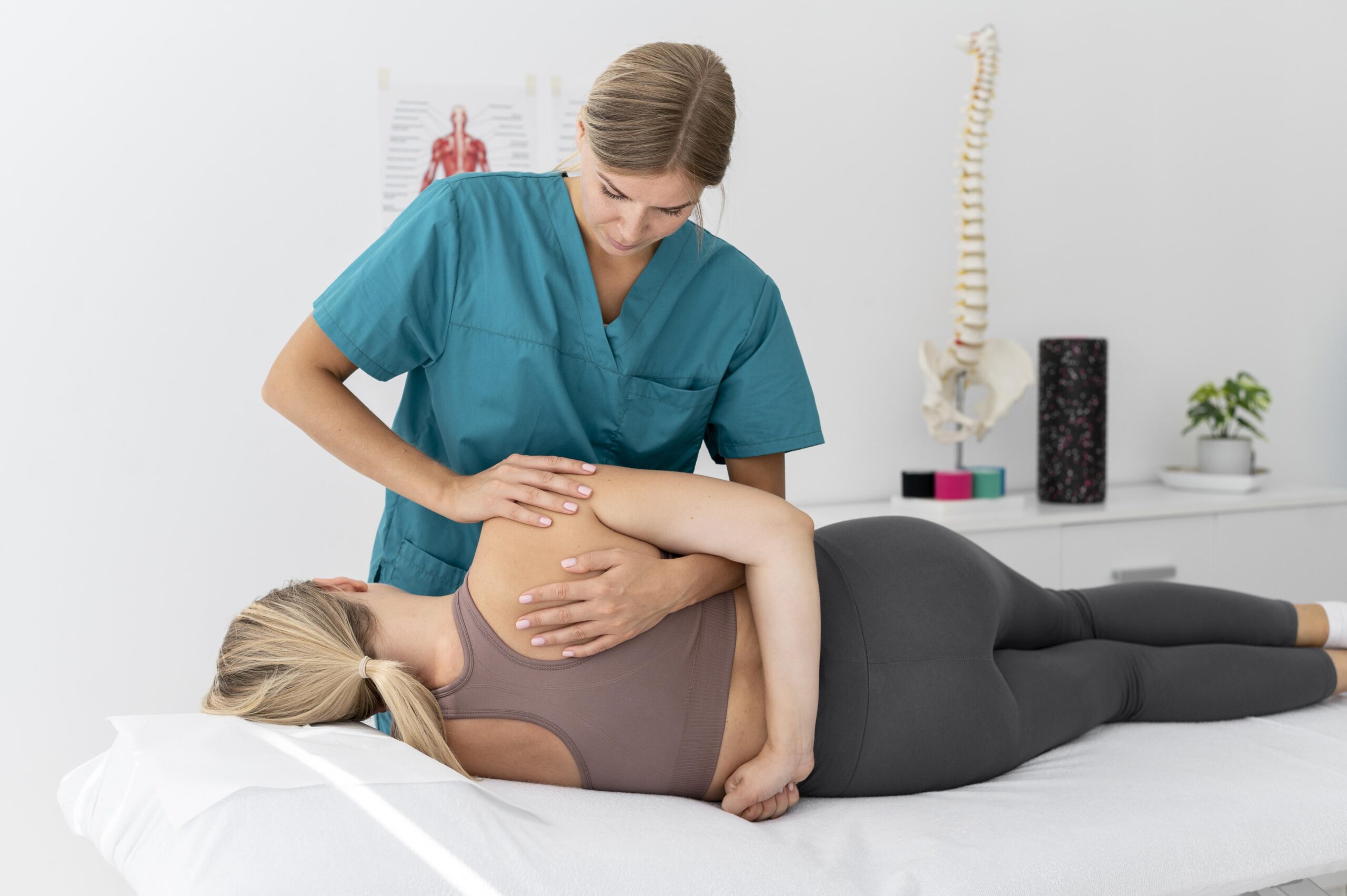
You have probably had pain before. I imagine that you have already been suggested to see a health professional for this problem. As Physio Plateau is a physiotherapy clinic, I will describe to you what physiotherapy is and what to expect during the first session as well as the following ones.
HISTORY
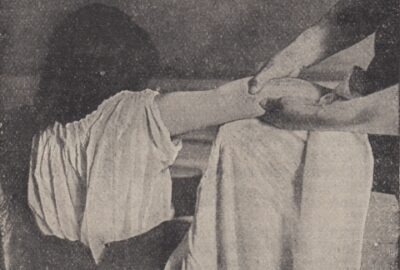
Scan of an old French medical dictionary. This appears to be a demonstration of the basic movements named by Dr. Johan Georg Mezger and based on the medical gymnastics philosophy of Per Henrik Ling 1776-1839.
The first historical reference of physiotherapy would be attributed to Per Henrik Ling in Sweden in 1813. He practiced gymnastics for the sick including massages and manipulations. The term first appeared in scientific literature in its German form in 1851 and in English in 1894 in the Montreal Medical Journal.
The profession gained momentum at the beginning of the 20th century because of two memorable events: the poliomyelitis epidemic, which created partial paralysis in those affected, and the First World War, which left many soldiers and civilians injured.
The rise of physiotherapy as a medical profession is launched.
In Québec
With us, the practice officially appeared with the inauguration of the School of Physiotherapy and Occupational Therapy affiliated with the Faculty of Medicine in 1954 at the University of Montreal. The Bachelor of Science in Physiotherapy has been awarded since 1969. The profession is supervised by the OPPQ since its creation in 1974. More recently, the finishing cohort of 2011 was the first to graduate with the mandatory Master’s in Physiotherapy.
WHAT DOES A PHYSIO DO ?
Physiotherapy is a discipline that aims to improve your physical abilities regardless of the reason for the deficiencies. It encompasses several fields of practice such as geriatrics, pediatrics, neurological rehabilitation, cardio-respiratory rehabilitation and musculoskeletal rehabilitation. The latter is the best known to the public and the most widespread in private clinics. Musculoskeletal care targets, among other things, problems with bones, ligaments, tendons, muscles, nerves and joints. Whether the pain or impairment appeared insidiously or following an accident, physiotherapy is the right discipline for your problem.

- During your first visit, the physiotherapist will review your general state of health to ensure that there are no contraindications to physiotherapy.
- Next, a subjective assessment with several specific questions about your current condition will be conducted to establish some diagnostic hypotheses.
- Afterwards, the therapist will observe your posture and then make you perform functional gestures (walking, squatting, raising your arms, stepping down, etc.). Then, he will assess your range of motion, your muscle function and other physical abilities to fully understand the origin of your problem.
By synthesizing all the information collected, he will be able to make a physiotherapy diagnosis. Thus, he will explain to you the source of your ailments and what path to take to solve your problem.
Treatments will then begin for a period that varies according to the type and severity of your injury. The modalities used are diverse: manual therapy, exercises of all kinds (strengthening, stretching, etc.), education, thermotherapy, electrotherapy, taping and many others.
If the need arises to refer your case to another health professional, the physiotherapist will do so by informing them of your condition and his impression so that the treatment is as effective as possible.
The objective of the physiotherapist at Physio Plateau and yours is the same, so do not worry, he will work for your interest !



Leave a reply