

Retractile capsulitis, also known as “frozen shoulder”, is a common but often misunderstood shoulder condition. It manifests itself as severe pain and loss of mobility in the shoulder, disrupting daily activities such as dressing, grooming, carrying objects or sleeping comfortably.
What is retractile capsulitis?
Retractile capsulitis is an inflammation of the shoulder joint capsule. This capsule is an envelope that surrounds the glenohumeral joint (between the scapula and the humerus). When it becomes stiff, it restricts movement and causes pain.
The condition generally develops gradually, and can last several months or even years. It affects around 2% to 5% of the general population, and is more common in women aged 40 to 60.
What causes this ?
In most cases, the exact cause remains unknown. This is known as idiopathic retractile capsulitis. However, certain factors increase the risk :
- Prolonged posture or lack of physical activity
- Prolonged immobilization of the shoulder (e.g. after humerus fracture or surgery)
- Rotator cuff damage
- Diabetes (type 1 or 2)
- Thyroid disorders
Over the past twenty years, the number of people affected by this condition has increased.
This seems to be linked to the decline in physical activity, as our society becomes increasingly sedentary with advances in technology, modes of transport and office jobs.
Capsulitis more often affects the non-dominant shoulder (e.g. the left shoulder in a right-handed person), which may seem paradoxical, but can be explained by different use in everyday tasks.
What are the symptoms ?
Capsulitis evolves slowly, in 3 main clinical phases :
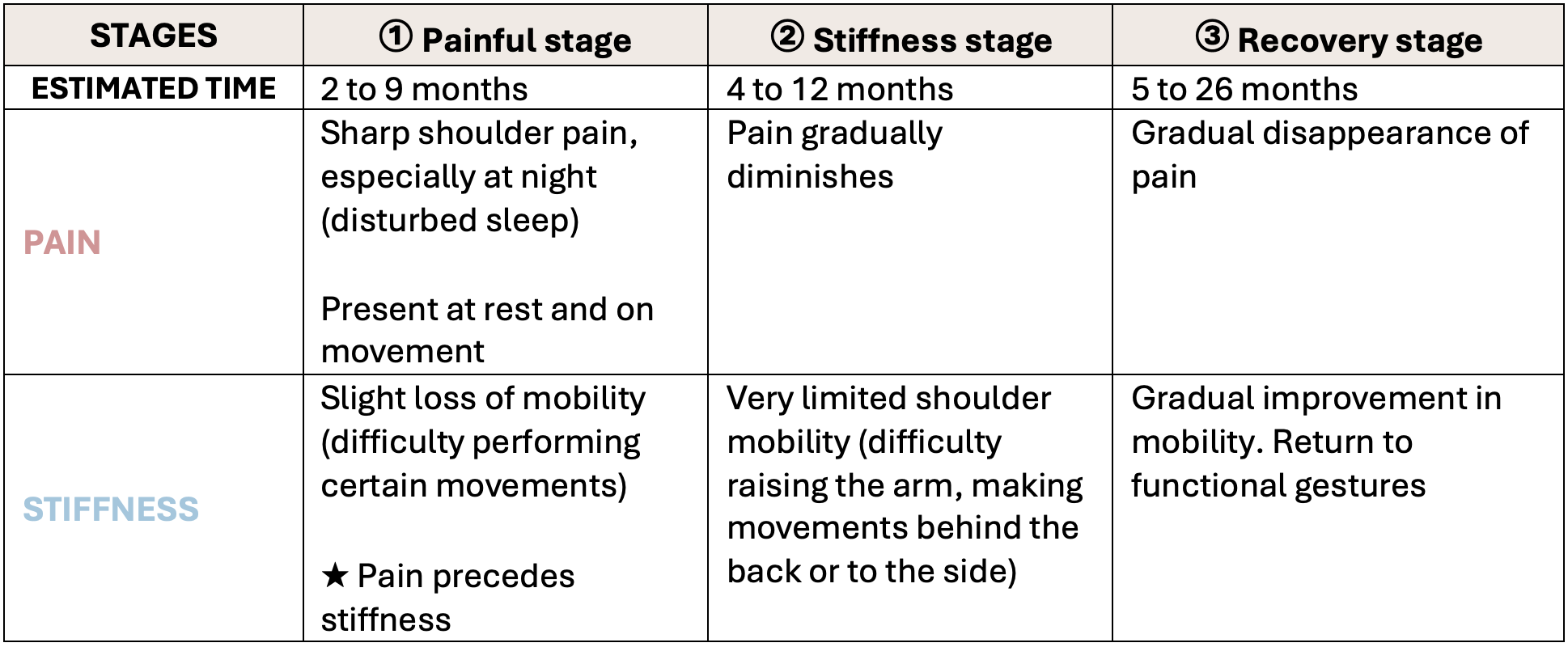
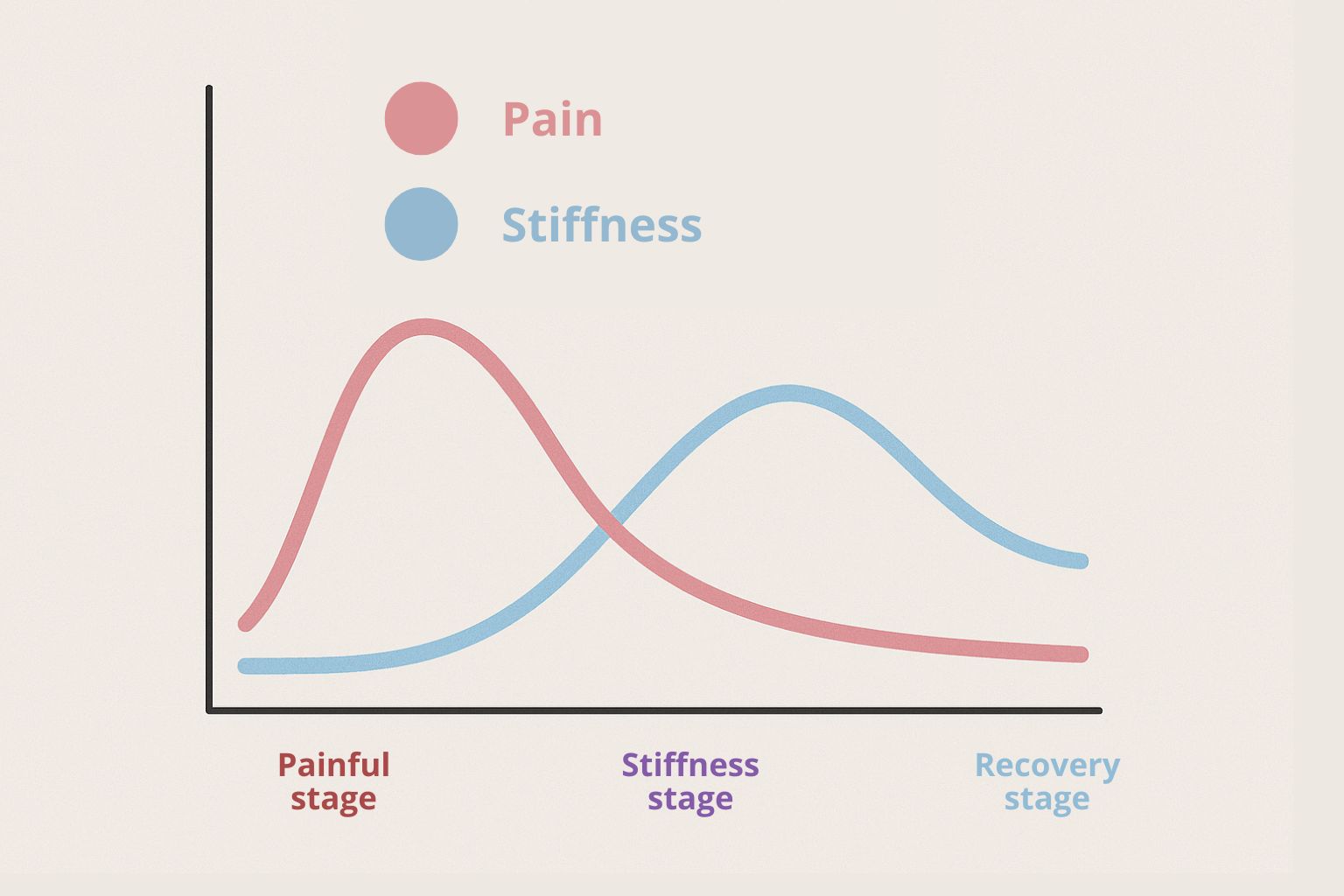
In short, retractile capsulitis can have an impact on quality of life, making certain tasks more difficult for several years, sometimes up to 4 years.
However, with the right treatment, especially physiotherapy, this period can be limited and the symptoms better controlled !
Why consult a physiotherapist ?
Physiotherapy is one of the pillars of treatment for retractile capsulitis. It aims to relieve pain, preserve or improve mobility, and promote a return to normal activities.
Here are some of the interventions that can be offered :
- Active and passive exercises to improve flexibility and strength
- Gentle shoulder mobilization (e.g. Maitland or Mulligan techniques)
- Specific stretching to restore elasticity to the capsule
- Muscle strengthening to stabilize the joint
- Proprioceptive exercises to improve movement control
- Manual therapies and neuromuscular stimulation
Some approaches, such as functional exercises involving hand-eye coordination (e.g. throwing and catching a ball), have also been shown to have positive effects on recovery.
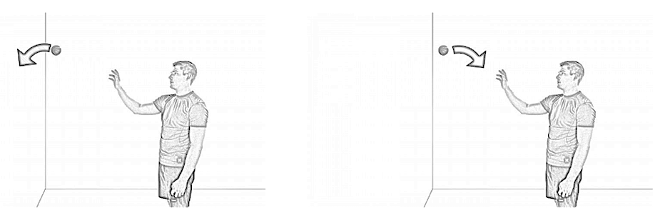
👉️ Every patient is different, and a personalized treatment plan is the key to better results.
What about medication ?
Medication can help temporarily relieve pain, especially in the early stages of the condition. Here are the most common options :
- Corticosteroids : Recommended especially in the early stages of the condition for rapid pain relief, calming inflammation, but their effects are temporary. Short-term effects are comparable to those of exercise, but with potential side effects.
- Distensive arthrography : Indicated in the treatment of retractile capsulitis of the shoulder in the stiff and painful phase. It consists of a local anaesthetic, an intra-articular glenohumeral injection under air or liquid pressure, and often a corticosteroid. It must be combined with immediate mobilization by a physiotherapist to accelerate functional recovery.
- Anti-inflammatories (NSAIDs) : Limited efficacy, especially in the long term.
In all cases, exercise remains the most sustainable and effective solution for improving mobility over the long term.
THE KEY ROLE OF EDUCATION

Being well-informed about the natural course of capsulitis, about realistic expectations and about the active role you can play in your treatment, is a key factor in success. A trusting relationship with your physiotherapist will help you stay motivated and better manage your condition.
In brief
- Retractile capsulitis is a common cause of shoulder pain and stiffness.
- It evolves in several phases and can last for several months or even years
- Physiotherapy plays a central role in relieving pain and restoring mobility
- Patient involvement and a personalized approach are essential for successful recovery


2 comments on “All you need to know about retractile capsulitis”
Usa Private Proxies
Pretty great post. I simply stumbled upon your weblog and wanted to say that I’ve truly enjoyed browsing your weblog posts. After all I’ll be subscribing to your feed and I’m hoping you write once more soon!
Olivier Benoit
Thanks a lot! We are working on new subjects!